Harley-Davidson & LiveWire Architect Just Gave AAP v1.2 Motorcycles and EVs
Sergey Kovalchuk, a Solutions Architect at Harley-Davidson and LiveWire, built AAP’s first major community release in his personal capacity — and it opens agentic vehicle commerce to the entire powersports and electric market.

Alex Yankouski
Co-founder, Lumika
AI agents are becoming the way people shop for vehicles. They research, compare, filter, and increasingly reach out to dealerships on the shopper’s behalf. The Auto Agent Protocol (AAP) exists so that this conversation is structured instead of chaotic: an open, free, JSON-RPC standard that lets any AI agent search a dealership’s inventory, pull vehicle details, submit leads, and book appointments - the same way, at every connected rooftop.
Until now, AAP spoke fluent “car.”
Starting with v1.2, it speaks motorcycle and electric too.
The gap this release closes
AAP’s Vehicle model was implicitly an automobile: car body styles, fwd/rwd/awd/4wd drivelines, city and highway MPG. A motorcycle dealership had no typed way to publish its inventory to AI agents. Everything would end up in free-text fields - which, in the agentic era, means invisible inventory.
Electric vehicles exposed a second gap. An electric motorcycle has no displacement, no MPG, no engine stroke. Buyers compare it on range, battery size, 0–60, and charging speed - and the protocol had a typed home for almost none of that.
v1.2 closes both gaps in one clean, fully backward-compatible release.
🏍️ Motorcycles are now first-class citizens
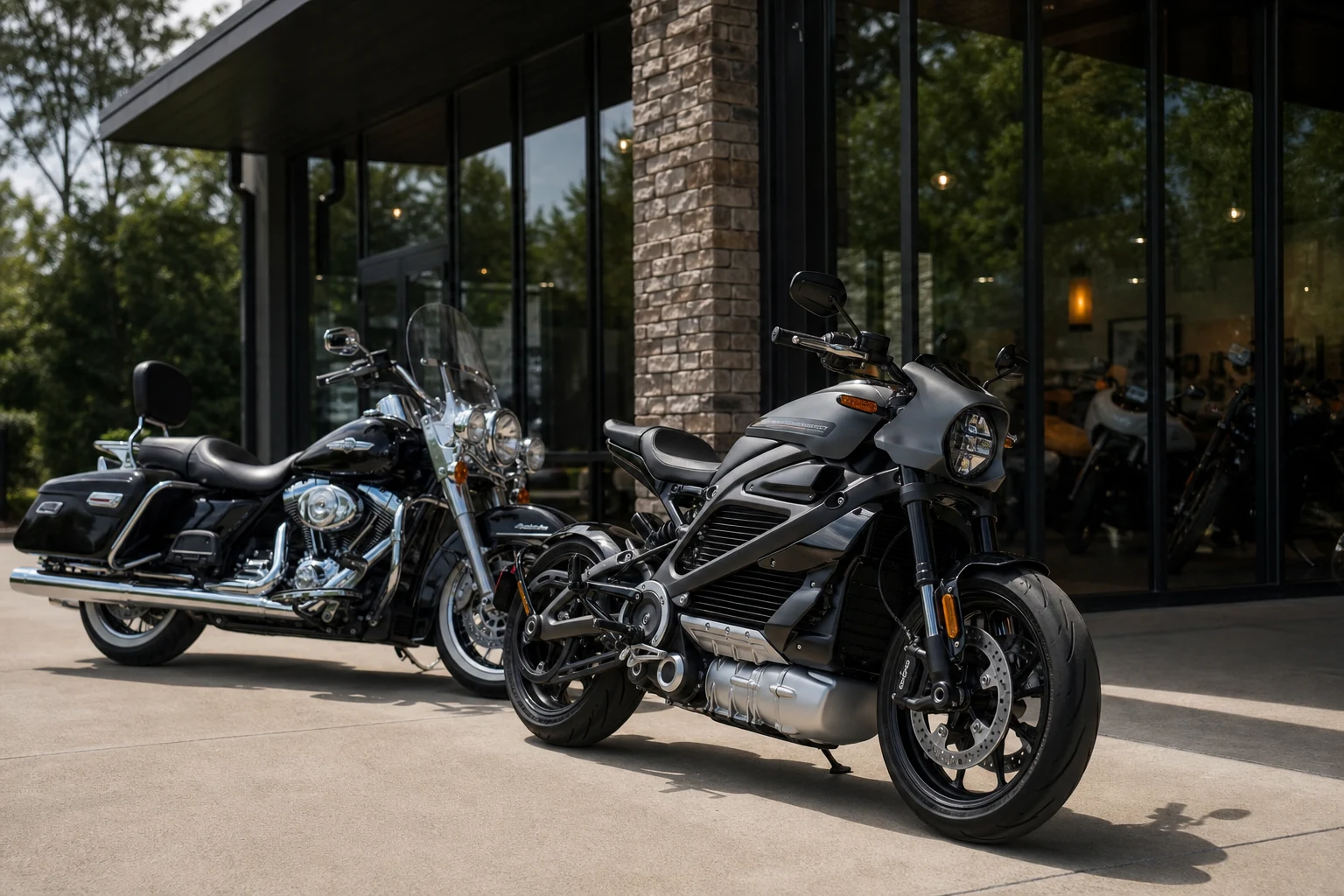
v1.2 introduces a vehicle_type switch on the unified Vehicle: car, motorcycle - and, already reserved in the enum, trailer, rv, and other. Motorcycles are the first new class to go live, and the door is open for the rest of the lot.
What makes this release stand out is the design restraint. Instead of bolting a pile of niche fields onto the public contract, it teaches the existing model to speak motorcycle:
- body now carries motorcycle segments - cruiser, sport, touring, adventure, standard, scooter - right alongside car body styles
- A new displacement_cc field captures the number riders actually shop on (883, 1250, 1868...) - and because it is class-agnostic, car dealers get a typed displacement spec out of the same release
- A free-form other_attributes map carries the long tail - final drive, engine stroke, wheel count, ABS, or any dealer-specific spec - so rooftops can publish rich data without waiting for a schema change
And it is wired into everything an agent does:
- Search and facets — agents can filter by vehicle_type, body segment, and displacement range ("touring bikes between 1,200 and 1,900 cc"), and enumerate exactly what a rooftop stocks
- Discovery — rooftops advertise motorcycle_sales / powersports capability tags, so agents know the vehicle mix before they even search
- ADF lead mapping — motorcycle leads fold into the ADF format dealer CRMs already run, with segments mapped into <bodystyle> and specs merged into comments
- Appointments — test_drive covers motorcycle demo rides out of the box
Best of all: when vehicle_type is absent, the listing is treated as a car. Every existing car integration keeps working unchanged, without touching a single line.
⚡ One electric schema for cars and motorcycles
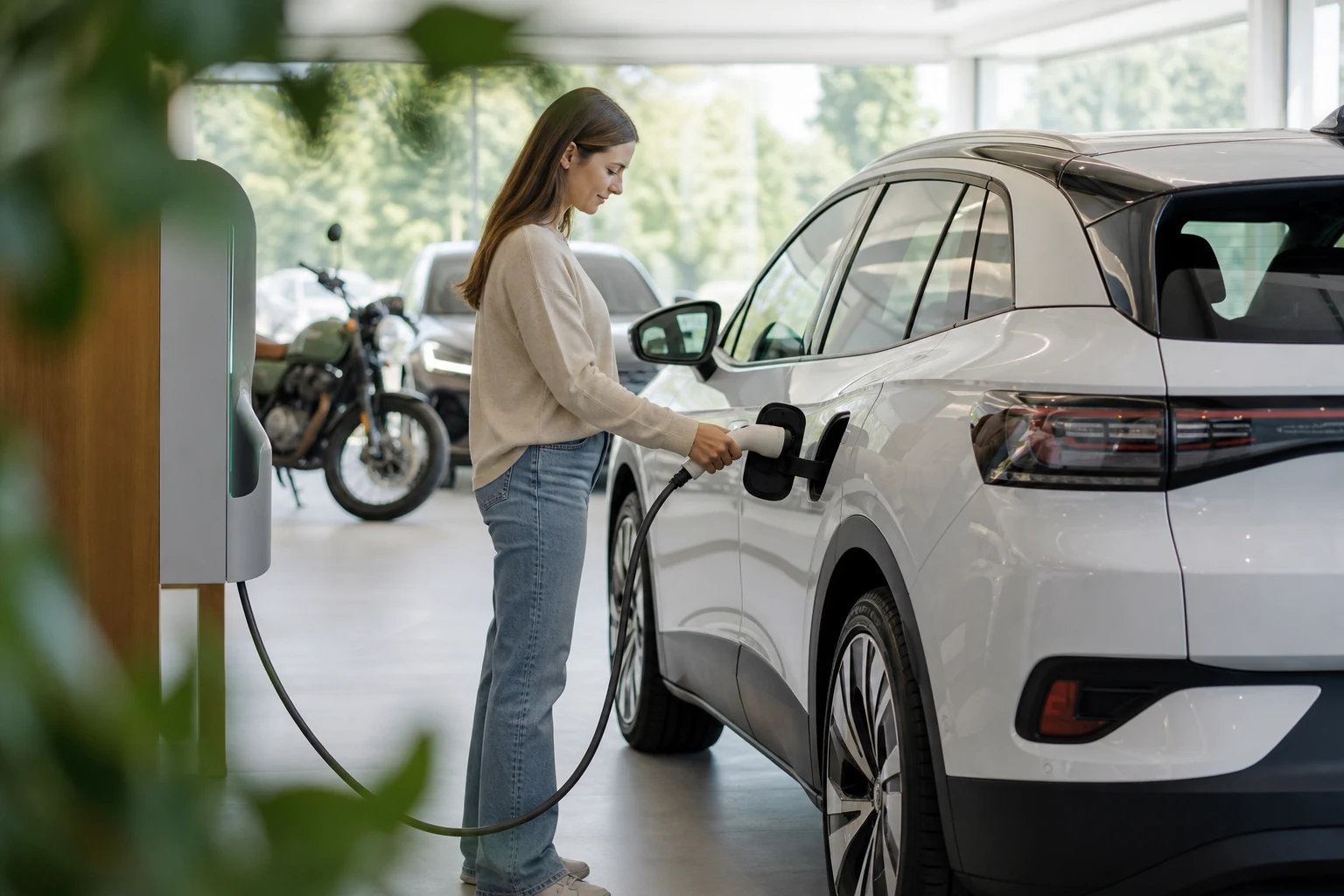
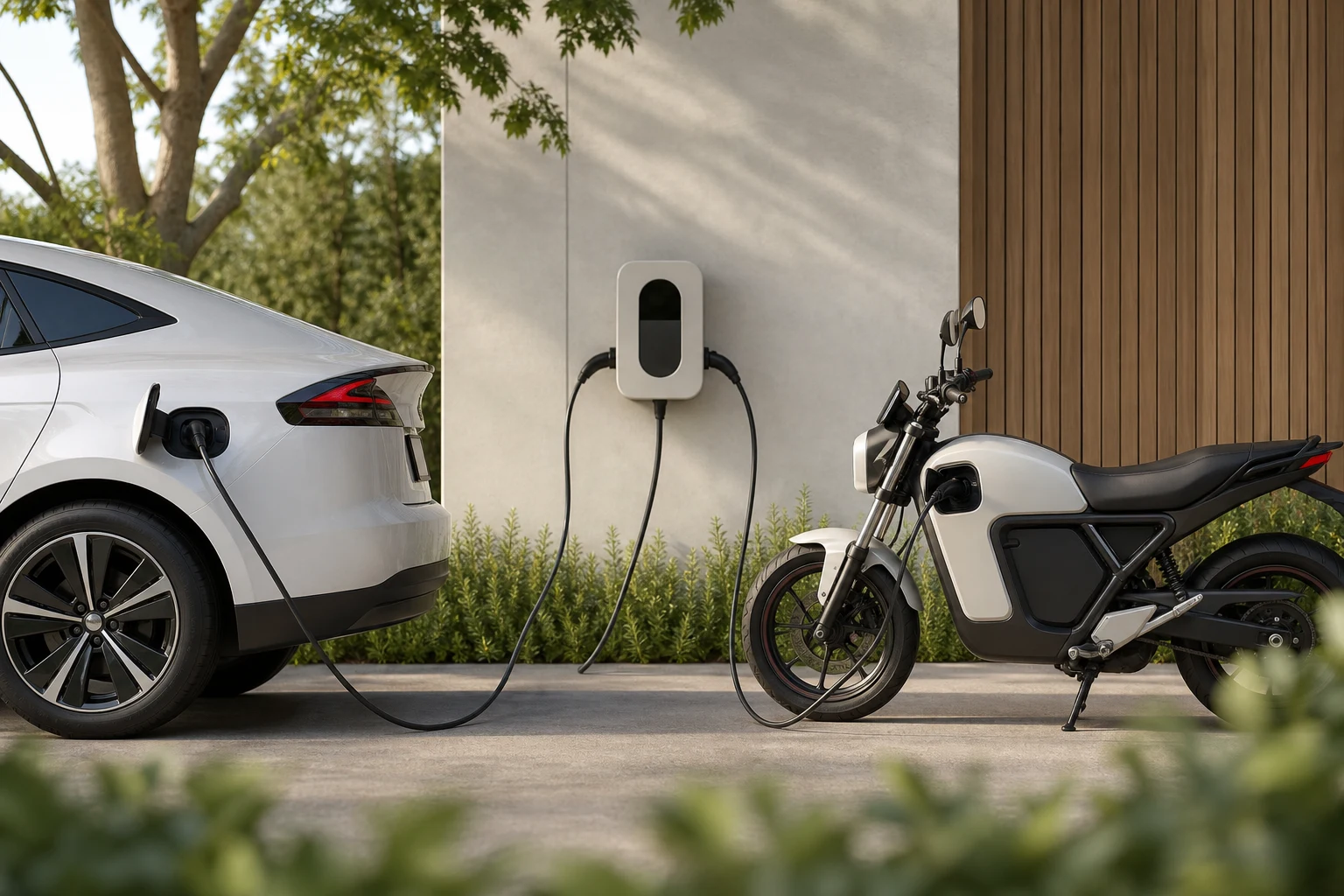
Rather than treating EVs as a motorcycle add-on, v1.2 adds a generic electric-powertrain group that works for any vehicle class:
- electric_range_mi - range, the primary spec
- battery_kwh - battery capacity
- motor_power_hp - motor output
- dc_fast_charge - DC fast-charging support
- charge_port - the connector standard (NACS, CCS, J1772...), the concrete thing EV shoppers filter on
Plus the search filters and facets to match: minimum and maximum range, DC fast charge, charge port. An agent can now ask a rooftop for “electric motorcycles with 100+ miles of range and NACS charging” and get typed answers. The same shape describes an electric SUV and an electric motorcycle — which is exactly where the market is heading.
Here is what an electric motorcycle listing looks like in v1.2, straight from the spec’s own examples - fully typed, fully queryable by any agent:
{
  "vehicle_type": "motorcycle",
  "make": "Acme Moto",
  "model": "Electric Standard",
  "body": "standard",
  "fuel": "bev",
  "electric_range_mi": 113,
  "battery_kwh": 10.5,
  "motor_power_hp": 84,
  "dc_fast_charge": false,
  "charge_port": "nacs",
  "price": 11999,
  "other_attributes": { "final_drive": "belt", "abs": true }
}
An AI agent can now find that bike by range, by price, by drive type — and submit a lead to the dealership in a format its CRM already understands.
Built like infrastructure, not a hack
This is the part vendors and platform teams should appreciate. v1.2 is not a quick patch:
- The released v1.1 spec is frozen into versioned docs, and v1.2 is cut as a clean new version — released versions stay untouched, guarded by automated freeze checks
- 108 schemas and 114 example payloads validate with zero errors
- The protocol stays strictly JSON-RPC only — one transport, no sprawl
- Every new field is optional, so nothing breaks for anyone already connected
It even ships with a mapped-out follow-up roadmap — rider-fit fields like seat height and weight, a richer category taxonomy, range-based facets and sorting — deliberately scoped out to keep this release focused and clean.
The contribution: you can feel the miles in it
AAP v1.2 is the protocol’s first major community-contributed release, and it shows exactly what open governance is for. It started as a public proposal, went through maintainer review, and landed as a versioned release candidate — the process working precisely as designed.
The contribution comes from Sergey Kovalchuk, a Solutions Architect at Harley-Davidson and LiveWire. To be clear: this is his personal open-source work, done in his personal capacity. But you can feel the miles in it. The motorcycle taxonomy - displacement, stroke, final drive, ABS, category - is designed the way only someone who lives in this domain would design it. The electric group reflects the same fluency: the understanding that an electric bike is compared on range and charge time, not cubic centimeters, and that the exact same fields should serve electric cars too.
That is years of powersports and electric-mobility industry experience, distilled into an open standard that every dealer and every vendor can now use for free.
What this means for dealers and vendors

If you run or serve a powersports rooftop: until now, agentic commerce standards were built around cars. With v1.2, motorcycle inventory becomes just as visible, searchable, and lead-generating for AI agents as car inventory — on the same protocol, through the ADF/CRM pipeline you already have.
If your inventory is going electric: EV shoppers filter on range and charging first. Now agents can too, with typed data instead of guesswork.
If you build dealer software (DMS, websites, CRMs): one schema now covers automobiles, motorcycles, and electric powertrains. Implement it once, serve the whole market.
The original proposal said it best: as AI platforms take over vehicle research and purchasing, unstructured inventory is invisible inventory. Motorcycles are the largest vertical adjacent to automotive, and electric is its fastest-growing segment. AAP v1.2 makes sure neither gets left out of the agentic era.
Get connected
- Read the spec and docs: https://autoagentprotocol.org
- Explore the v1.2 contribution: PR #22 and the original proposal
- Star and contribute: https://github.com/auto-agent-protocol/auto-agent-protocol
- Want your dealership or platform connected to AAP? Contact us at hello@dealerhandshake.com
Have an idea for the protocol? Open a proposal. v1.2 started as exactly that - one engineer, one well-argued issue, and an open door.
Sergey Kovalchuk contributed to the Auto Agent Protocol in his personal capacity. His work and views are his own and do not represent Harley-Davidson or LiveWire.
Alex Yankouski
Co-founder, Lumika